
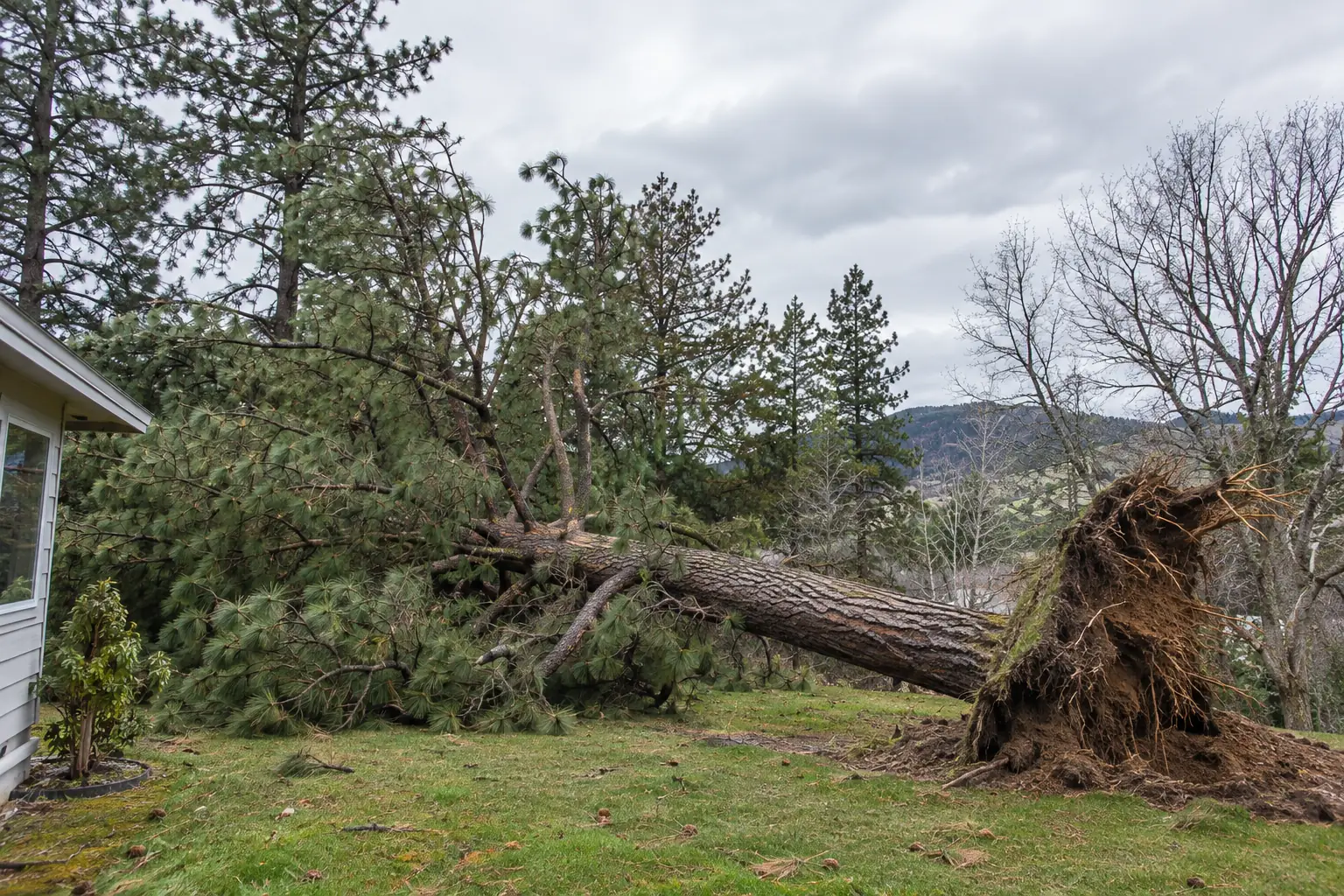
After a windstorm or heavy snow in Medford, a split, uprooted or leaning tree near your home needs to be looked at before it is cut. Call (541) 200-0074 to reach a tree service about storm damage tree removal. It rings through to a single local company, independent of this site and licensed by the CCB. The call is free, and it is the moment to ask how the company handles estimates. If a tree is on a power line, give it 35 feet of room and dial 911 ahead of any other number.
Tree Removal Medford is a free referral service. It does no tree work itself. It connects you with a local company that looks at the damage, explains the plan and gives you its own price. This page covers how storms hit trees in the Rogue Valley, how to sort the damage by urgency, what to record for your insurer, and what cleanup usually involves. For the basics of the service, start at the home page.
How storms damage trees in the Rogue Valley
Wind and heavy, wet snow cause most storm damage to trees around Medford. The valley does not get big storms every year, but when one arrives, the damage can spread across a wide area in a single day.
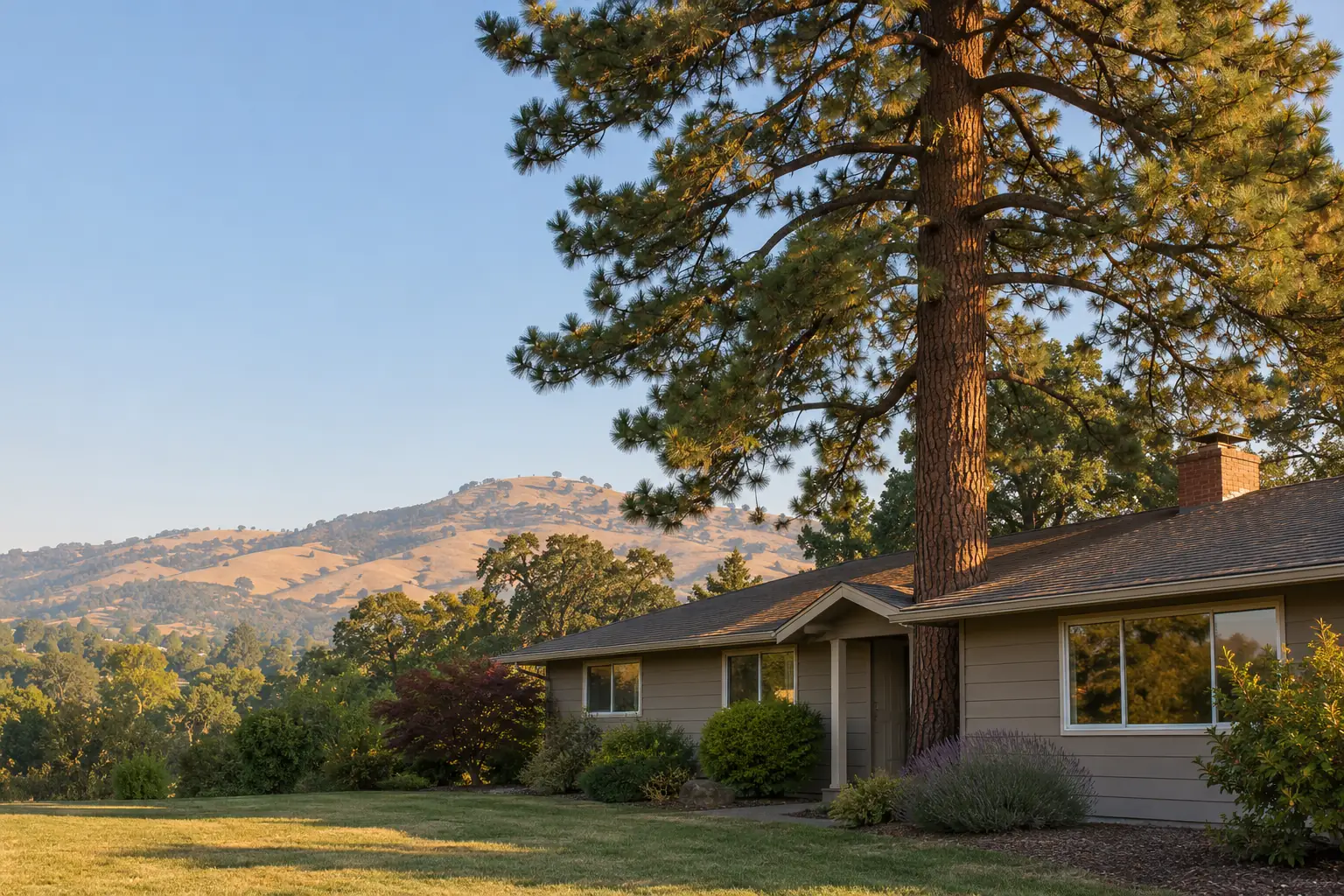
A few recent storms show the pattern:
- January 2023 windstorm. The Mail Tribune reported that the National Weather Service measured a gust of 54 mph at the Medford airport and up to 99 mph at Acorn Woman Peak near Jacksonville. Medford Public Works responded to 19 downed trees and tree limbs inside city limits in a single day (Mail Tribune via Yahoo News, January 2023).
- November 2019 "bomb cyclone." The National Weather Service office in Medford reported that this storm on November 25 and 26 set a record for the lowest November air pressure at the Medford airport. Gusts of 60 to 80 mph were common along the coast and at higher elevations just inland, with widespread reports of downed trees and power lines (NWS Medford, Crater Chronicle, Winter 2019).
- February 2019 snow. In the last week of February, a cold atmospheric river brought heavy, wet snow to parts of southwest Oregon. NWS Medford reported thousands of downed trees in the Umpqua Basin to the north, and the governor declared an emergency for several counties, including Jackson County (NWS Medford, February 2019 climate summary).
Trees that were already weak tend to fail first. Branches loaded with oak mistletoe often break off in storms or high winds (PNW Plant Disease Handbook), and the U.S. Forest Service links many uprooted oaks in urban areas to Armillaria root disease (USDA Forest Service). If you had a declining tree before the storm, check it first. The hazard and dead tree removal page explains those warning signs.
To follow a storm as it comes in, watch the forecasts and warnings from the National Weather Service office in Medford.
Sorting the damage by urgency
Not every broken tree after a storm needs a call that night. This table sorts common storm damage by how fast it needs attention. The first rows match the emergency list used on this site.
| Damage | How urgent | What to do |
|---|---|---|
| Tree or limb on the house, garage, car or fence | Emergency | Get people clear, take photos, call (541) 200-0074 |
| Tree down on or against a power line | Emergency, 911 and utility first | Back up 35 feet, dial 911, then Pacific Power at 1-877-508-5088. Call (541) 200-0074 after those |
| Tree blocking the driveway or road | Emergency | Call (541) 200-0074; report a blocked public road to local authorities |
| Tree cracked, uprooted or leaning toward a home or where people are | Emergency | Keep people out of the fall zone, call (541) 200-0074 |
| Broken limb hanging over a roof, driveway, yard or play area | Emergency | Keep people out from under it, call (541) 200-0074 |
| Limbs and debris on the lawn, not blocking or hitting anything | Can wait | Schedule cleanup at a normal visit |
| A tree that leaned the same way before the storm and has not moved | Can wait | Have it looked at soon |
For the full emergency steps, including what to do in the first hour, see emergency tree removal in Medford.
Split, uprooted and leaning trees
Each type of storm damage fails in its own way, and that changes how a company handles it.
Split trunks and torn limbs
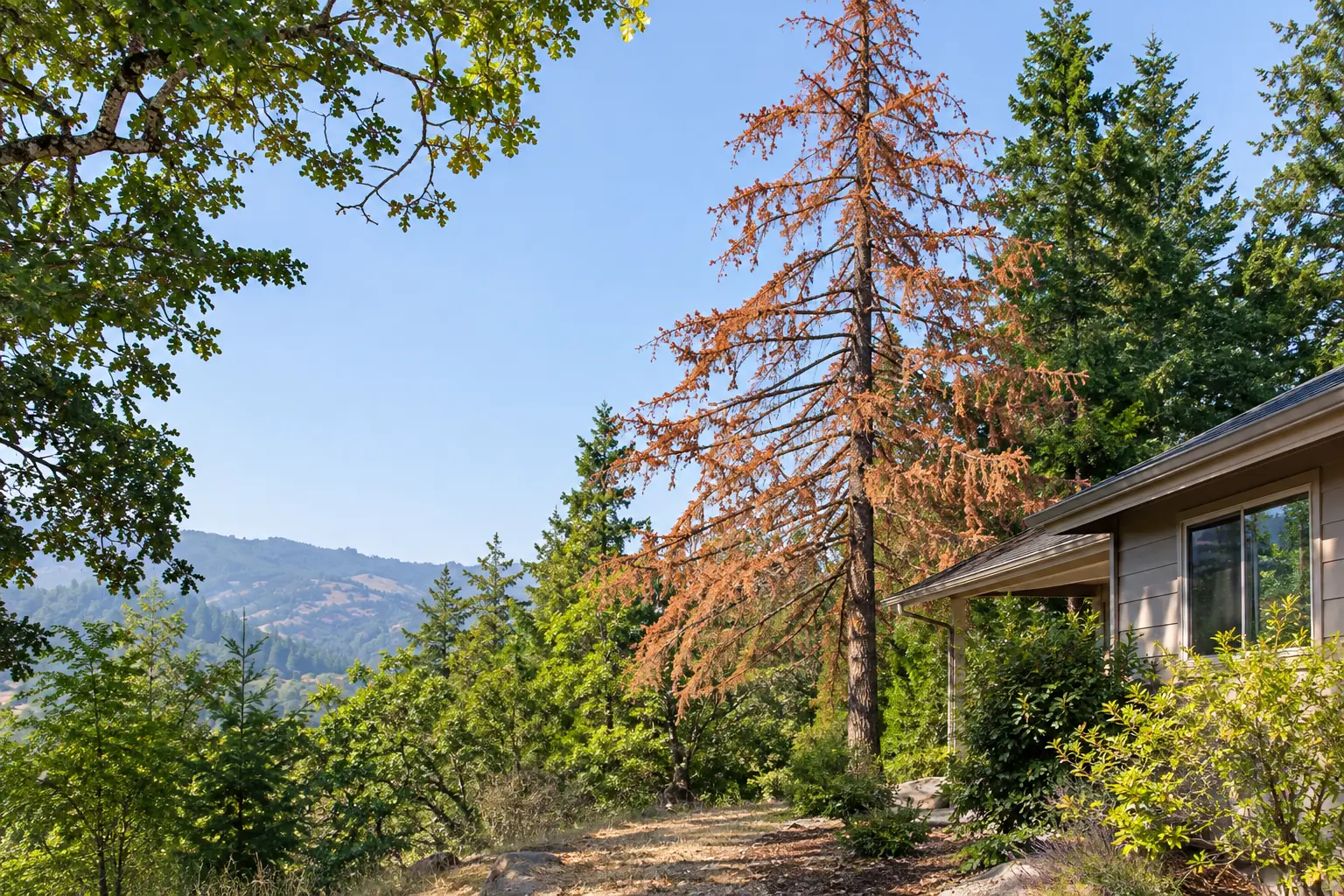
A split trunk or a limb torn out at a fork leaves the remaining wood weaker than it looks. Half of a split tree may still be standing, but the open wound means it has lost much of its support. A torn limb can also stay hung up in the crown and drop later. These "hangers" are a reason to keep people out from under a damaged tree until it is cleared.
Uprooted trees
An uprooted tree that is lying flat is usually more stable than one that is half out of the ground. The danger is the root plate. When a large tree tips over, its root ball can tilt back toward the hole once the trunk is cut free. Do not cut a fallen tree near its roots yourself. A tree company plans those cuts so the stump and root plate do not move onto anyone.
Trees that are now leaning
A tree that started leaning during the storm is the hardest to judge from the ground. Signs that it is still moving include fresh cracks in the soil on the side away from the lean, roots lifting out of the ground, and a lean that looks worse each morning. A new lean toward a house or where people are is on the emergency list. Keep everyone out of the area the tree could reach if it fell, and call (541) 200-0074.
Hung-up trees
A tree that fell into another tree and is caught there is under tension and can shift without warning. This is one of the most dangerous situations in tree work. Leave it alone and let the company deal with it.
Before anyone cuts: safety and power lines
Check for power lines before you go near any storm-damaged tree. If a tree or limb is on or against a line, stand at least 35 feet clear, call 911, and after that call Pacific Power at 1-877-508-5088 (Pacific Power outages and safety). Pacific Power says never to go near a downed power line. A tree company works only after the utility makes the line safe.
Wires can be hidden under branches or snow, and a line can sag into a tree without falling all the way down. Look up and around before you walk into the yard. More on how utility lines and private tree work fit together is in trees near power lines in Medford.
Chainsaw work on storm damage is risky even for experienced people, because the wood is bent and loaded in ways that are hard to read. The federal safety agency lists falls, falling objects and electricity among the main hazards in tree care work (OSHA tree care industry).
Documenting storm damage for insurance
Your insurer will usually want a clear record of what the storm did, made before anything is moved. Take photos and video of the whole tree, the base and roots, and every part of the house, car or fence it hit. Note the date and time of the storm.
The Oregon Division of Financial Regulation, which oversees insurers in this state, says to photograph or video the damage, protect the property from further harm and keep the receipts (Oregon DFR storm guidance). Ask your insurer what else it wants before the tree is moved.
Other records to keep:
- The tree company's written estimate and final invoice.
- Receipts for anything you paid to protect the house, such as a roof tarp.
- The claim number and the name of each person you spoke with at the insurance company.
- If the tree came from a neighbor's yard, photos that show where it stood.
Coverage depends on your policy and on what the tree hit, and some policies cap what they pay to remove a fallen tree. The guide on storm damage, insurance and trees covers the general questions to ask your insurer. If a claim stalls, the Oregon Division of Financial Regulation offers free help from consumer advocates (Oregon DFR consumer help).
Cleanup after storm damage
Cleanup is often the largest part of a storm job, and it is worth asking exactly what the estimate includes. A tree that came down in one piece still has to be cut up, moved and hauled away, and the debris can cover a whole yard.
Questions to ask the company before work starts:
- Does the price include hauling away the wood and brush, or will it be left in a pile?
- Will smaller branches be chipped, and can you keep the chips?
- Does the price include the stump, or is stump grinding separate?
- How will the company protect the lawn, driveway and fence while it works?
- If more than one tree was damaged, can they all be priced together?
- What is your CCB number? You can check it at the Oregon CCB license search.
After a big storm, people sometimes go door to door offering fast tree cleanup. Check the license before you agree to anything, and get the price in writing. If you want to understand pricing before the company arrives, read the tree removal cost guide for Medford. For a big tree that survived but now worries you, see large tree removal near homes.
Storm damage tree removal outside Medford
Storms rarely stop at the city limits, and the same number works across the valley. Callers in Central Point, Jacksonville, Phoenix, Eagle Point and White City get the same independent company on the line. After a storm, ask it first whether it is taking jobs in your town. In the January 2023 storm, the strongest gusts were measured on the hills near Jacksonville rather than on the valley floor, so wind can be very different from one part of the valley to another in the same storm.
Frequently asked questions
What should I do first after a storm knocks a tree down?
Check for power lines, then get people away from the tree. If a line is involved, walk 35 feet off, dial 911, and follow with Pacific Power at 1-877-508-5088. Take photos before anything is moved, then call (541) 200-0074 to reach a local tree company and call your insurer to start a claim.
Is a tree that started leaning in the storm an emergency?
A tree that is cracked, uprooted or leaning after a storm and could fall on a home or where people are is on the emergency list. Keep everyone out of the area it could reach and call (541) 200-0074. A tree that leaned the same way before the storm can usually wait for a normal visit.
Can I wait to clean up storm debris?
Branches and debris that are not blocking or hitting anything are not an emergency, and cleanup can be scheduled at a normal daytime visit. Clear a path for cars and people first, and keep children away from piles with broken wood.
Does homeowners insurance pay for storm damage tree removal?
It depends on your policy and on what the tree hit. Some policies limit what they pay to remove a fallen tree. Photograph the damage before anything is moved, keep every estimate and invoice, and confirm coverage with your insurer.
How soon can a company come after a big storm?
No one can promise a time. After a widespread storm, every local tree company gets busy at once. The company you are connected with will tell you what it can do and when.