
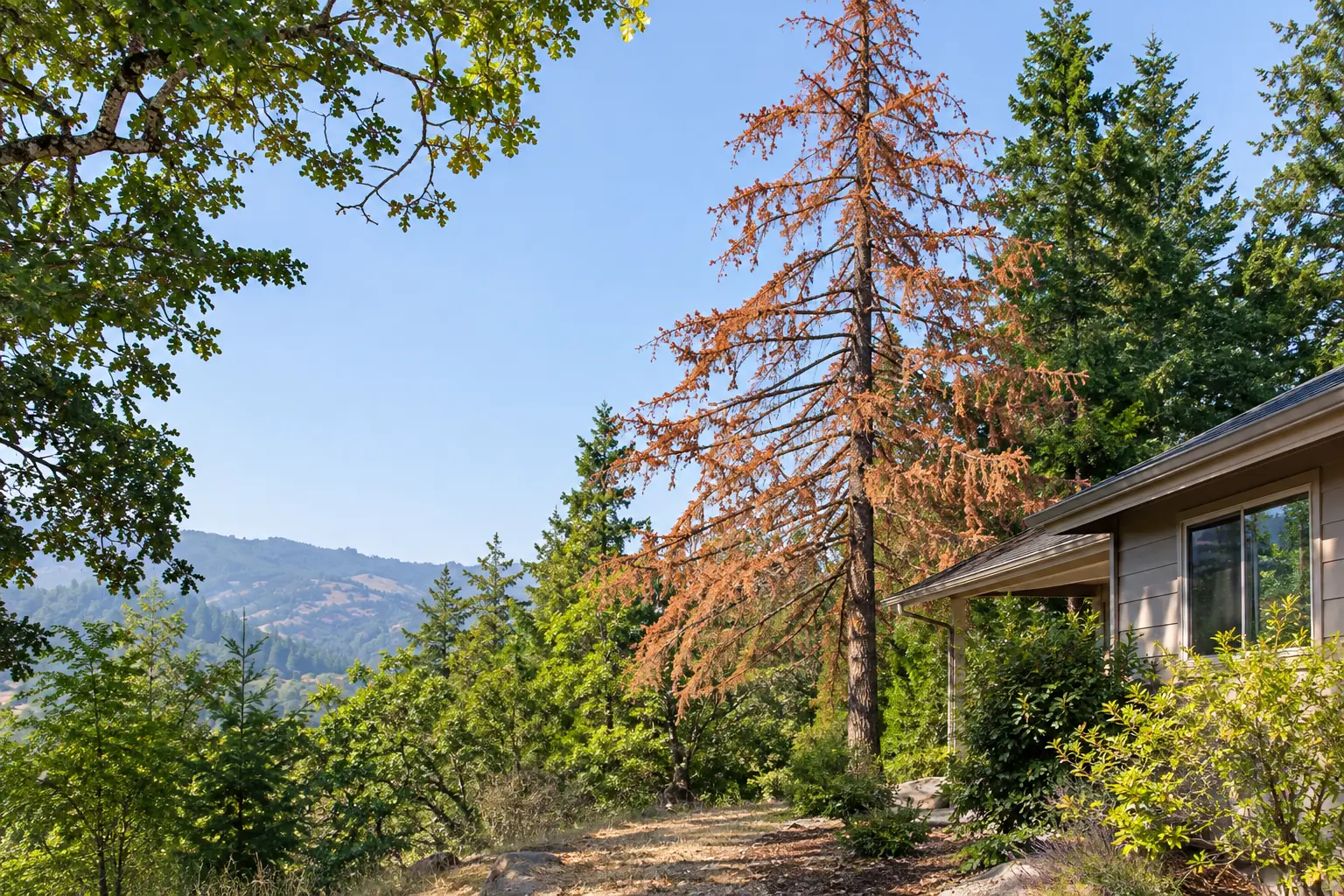
A tree is a hazard when it has a defect that could make it fail and it stands where it could hit a home, a car or people. In Medford, the common warning signs are dead limbs, cracks, a new lean, fungus at the base and roots lifting the soil. Call (541) 200-0074 to reach a tree service, which here is a single CCB-licensed company run independently of this site, and request a look at the tree.
Tree Removal Medford is a free referral service, not a tree company. It connects you with a local company that does the work. This page explains the warning signs, why so many trees in the Rogue Valley are struggling, and when it makes sense to get a professional opinion before you decide on hazard tree removal. Start at the home page for an overview of the service.
Warning signs to look for
Most trees that fail show signs first. The University of California's pest management program lists dead or dying limbs, cracks in the trunk or where limbs fork, trunks that lean or tilt, fungal growth such as conks or mushrooms, cavities, wounds in the bark, and cracks in the soil near the base (UC IPM, recognizing hazardous trees).
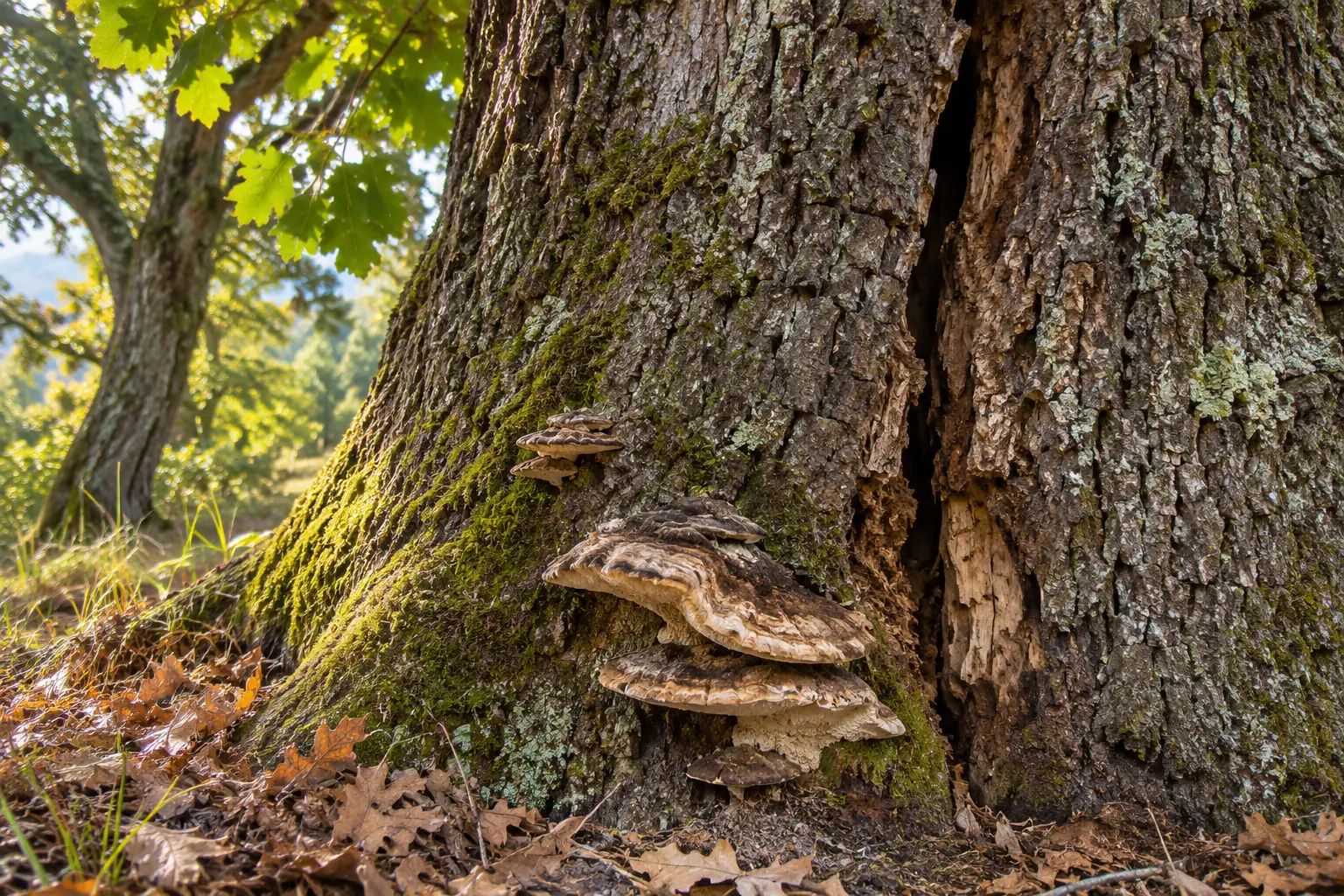
Here is what each sign can mean in a yard:
| What you see | What it can point to |
|---|---|
| Dead limbs, often with no leaves or brown needles | The limb can drop on its own, sometimes on a calm day |
| A crack in the trunk or at a fork | The wood is splitting and may give way under wind or snow load |
| A lean that is new or got worse | The roots may be failing on one side |
| Mushrooms or shelf fungus on the trunk or base | Decay inside the tree or in the roots |
| Soil cracking or lifting on one side of the base | Roots pulling loose, often after wet weather and wind |
| A hollow or cavity in the trunk | Less solid wood holding the tree up |
One sign alone does not mean a tree must come down. A lean the tree has grown into over many years is different from a lean that appeared after one storm. A deeper explanation of each sign is on the hazard tree warning signs guide.
Why trees in the Rogue Valley decline
Hot, dry summers stress many trees in the Medford area, and stressed trees are more open to insects and disease. Oregon State University Extension notes that trees need adequate moisture to keep their defenses working, and that excess heat can cause drought symptoms even when there is water in the soil (OSU Extension, Why are my trees dying?, revised July 2025). The same publication names Douglas-fir and grand fir as the hardest hit by recent hot, dry summers.
Douglas-fir and the flatheaded fir borer
Douglas-fir decline is a serious and growing problem in southwest Oregon. An OSU Extension study estimates about 260,000 Douglas-firs were killed on nearly 150,000 acres in Jackson, Josephine and Douglas counties from 2016 to 2019, based on aerial survey data. It ties the die-off to harsh sites, hotter drought and an insect, the flatheaded fir borer (OSU Extension, Trees on the edge, September 2023).
The same study lists signs a homeowner can see. Branches turn red, then gray as dead needles fall. Small pitch droplets may show up in bark crevices. Woodpeckers flaking off bark to reach larvae is a late sign, and the authors say that once bark flaking is seen, the tree will almost certainly die. A dying fir next to a house is a good reason to call before it dries out and drops limbs.
Bark beetles in ponderosa pine
Ponderosa pines in the Rogue Valley can be attacked by western pine beetle, especially in dry years. The Oregon Department of Forestry says second-growth ponderosa pine growing in the oak zone of southwestern Oregon is particularly open to attack during dry years, and that infestations increase sharply after drought (ODF western pine beetle fact sheet, March 2017).
ODF lists the signs: small pitch tubes on the bark, orange-tan boring dust, and woodpeckers flaking the bark. During drought the tree may not make pitch tubes at all, but the boring dust is still there. ODF also notes that this beetle can complete three or four generations a year in southwestern Oregon, compared with two in most other places, which helps explain how fast a group of pines can fade.
Mistletoe in oaks
Oak mistletoe weakens oaks over time, and heavy clumps can make branches break. The Pacific Northwest Plant Disease Management Handbook says heavily infected trees are weak, grow more slowly and may die during drought, and that branches heavily laden with mistletoe often break off in storms or high winds (PNW Plant Disease Handbook, oak mistletoe). The usual fix is cutting out the infected branches. Removal of the whole tree is a separate decision that depends on how much of the crown is affected and what the tree could hit.
Root disease
Root disease is hard to see because most of the damage is underground. OSU Extension says root diseases decay and kill tree roots, that symptoms often show up as thinning, yellowing crowns, and that visible symptoms cover only about half the area actually affected (OSU Extension, What's lurking beneath the forest floor?, March 2023).
Armillaria root disease is one of the main ones. The U.S. Forest Service notes that older Oregon white oak and California black oak are often damaged, and that uprooted oaks in urban areas are frequently linked to it. Its signs include clusters of mushrooms at the base of the tree in late summer and fall, and white fan-shaped sheets of fungus under the bark near the soil line (USDA Forest Service, Armillaria root disease). A tree with rotting roots can look healthy above ground and still tip over in a storm.
Where the tree stands matters as much as its health
A dead tree in the back of a large lot and a dead tree over a bedroom are two very different problems. The risk comes from both parts: how likely the tree is to fail, and what it would hit if it did.
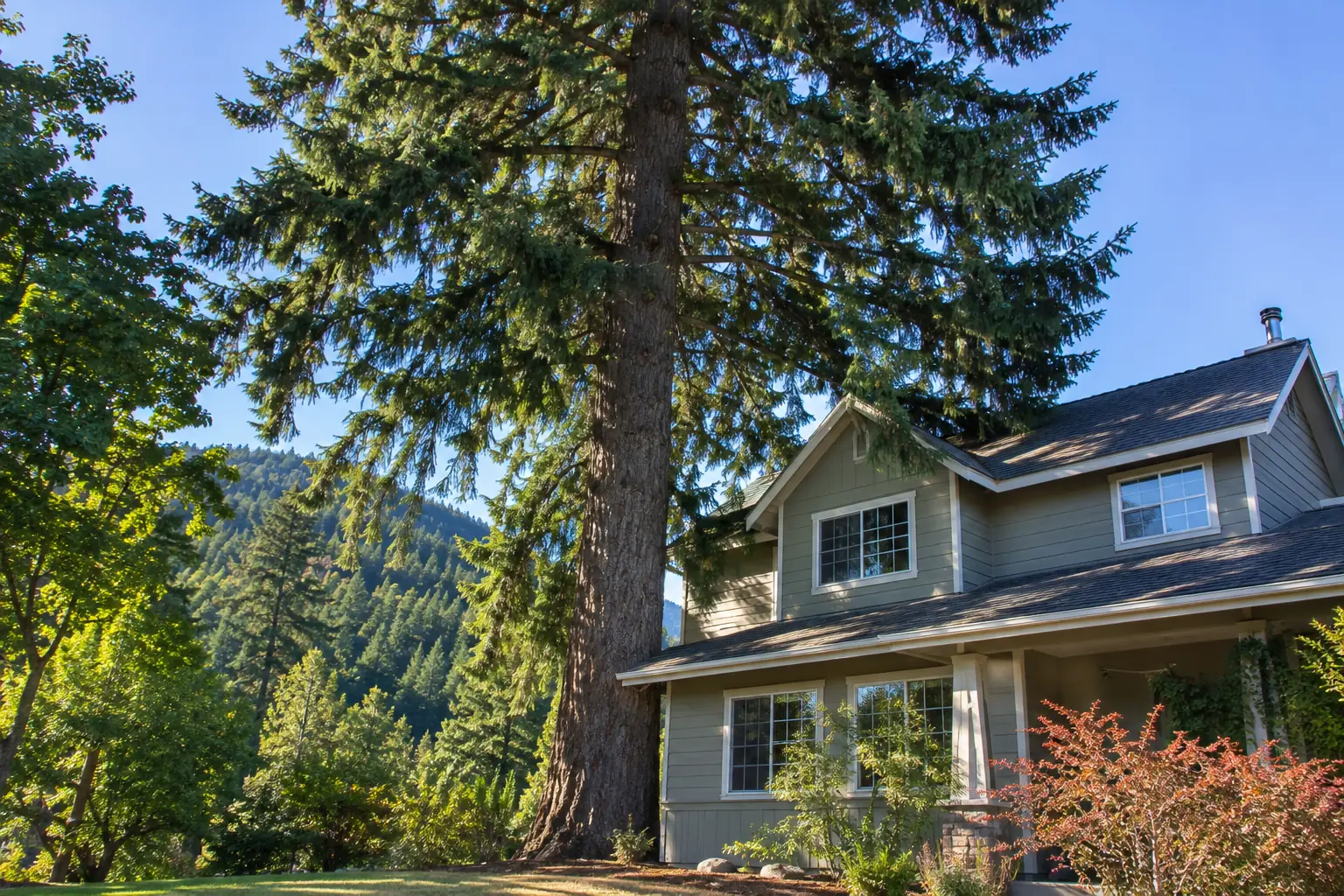
Walk around the tree and look at what sits inside the distance of its height. Common targets include:
- The roof, garage or carport.
- The driveway and parked cars.
- A play area, patio or deck where people spend time.
- A fence, shed or neighbor's yard.
- A sidewalk or street.
- Service wires running to the house.
If the tree is close to a power line, read trees near power lines in Medford before anyone works on it. Pacific Power warns never to prune limbs or remove trees near power lines yourself (Pacific Power tree pruning and planting).
When a professional assessment helps
A professional look helps most when you can see a problem but cannot tell how serious it is. UC IPM advises that a tree whose failure could cause injury or property damage should be inspected regularly by a competent expert, such as an ISA Certified Arborist (UC IPM). You can search for certified arborists by area on the International Society of Arboriculture's public site (ISA find an arborist).
Situations where a second opinion is worth it:
- A large tree over the house shows one warning sign, and you want to know whether pruning could fix it.
- Several trees in one area are thinning or browning at once, which can point to root disease or insects.
- A tree is valuable to you, and you want to know your options before removal.
- You are not sure whether a permit is needed. See the guide on tree removal permits in Medford and confirm with the city.
When you call (541) 200-0074, find out from the company when it can see the tree and what, if anything, the estimate costs. A standing tree that is not an emergency is the kind of job that tends to be quoted for nothing. If it recommends removal, ask it to explain what it saw and why.
Questions to ask about dead tree removal
Dead trees can be more dangerous to work on than living ones, because the wood can be brittle and limbs can snap off during the work. A careful company will plan for that. Before work starts, ask:
- What is your CCB number? You can check it at the Oregon CCB license search.
- How will the tree come down, in one piece or in sections?
- What will you do to protect the roof, fence, lawn and driveway?
- Does the price include hauling away the wood and cleanup?
- Does it include the stump, or is stump grinding a separate line on the estimate?
- If the tree has insects or disease, what happens to the wood?
The last question matters for pines. ODF notes that pine engraver (Ips) beetles prefer to attack fresh pine slash and then move to standing green pines, so a pile of freshly cut pine wood next to healthy pines can feed the next round of beetles (ODF Ips beetle fact sheet). For a sense of what affects the final number, read the tree removal cost guide for Medford.
Hazard tree removal around Medford
Dead and declining trees are common across the valley, not only in Medford. Homeowners in Central Point, Jacksonville, Phoenix, Eagle Point and White City can call the same number, and should ask the company whether it comes out to their town. If a hazard tree has already cracked, uprooted or started leaning toward the house after a storm, treat it as urgent and read emergency tree removal in Medford.
Frequently asked questions
How do I know if a dead tree needs to come down?
Look at two things: the tree's condition and what it could hit. A dead tree near a house, driveway, play area or power line is a strong candidate for removal. A dead tree far from anything may be less urgent. The company you are connected with can look at it and price the removal. Ask about any estimate fee when you call.
Is a leaning tree dangerous?
It depends on how long it has leaned. A tree that grew at an angle over many years may be stable. A new lean, or one that got worse after wind or rain, along with soil cracking or lifting at the base, is a warning sign and worth a call.
My fir is turning red from the top down. What is happening?
Red and then gray branches are one of the signs OSU Extension lists for Douglas-fir decline in southwest Oregon, which is often tied to drought and the flatheaded fir borer. Once woodpeckers start flaking the bark, the study says the tree will almost certainly die. Have it looked at if it could hit anything.
Can mistletoe kill an oak?
Heavy, long-term mistletoe weakens oaks and can make them more likely to die during drought, and loaded branches often break in storms. Cutting out infected branches is the usual first step. Whether the whole tree should come out depends on how much of it is affected.
Do I need a permit to remove a hazard tree in Medford?
Rules depend on where the tree is and the type of property. Read the guide on tree removal permits in Medford and confirm with the City of Medford or Jackson County before work starts.