
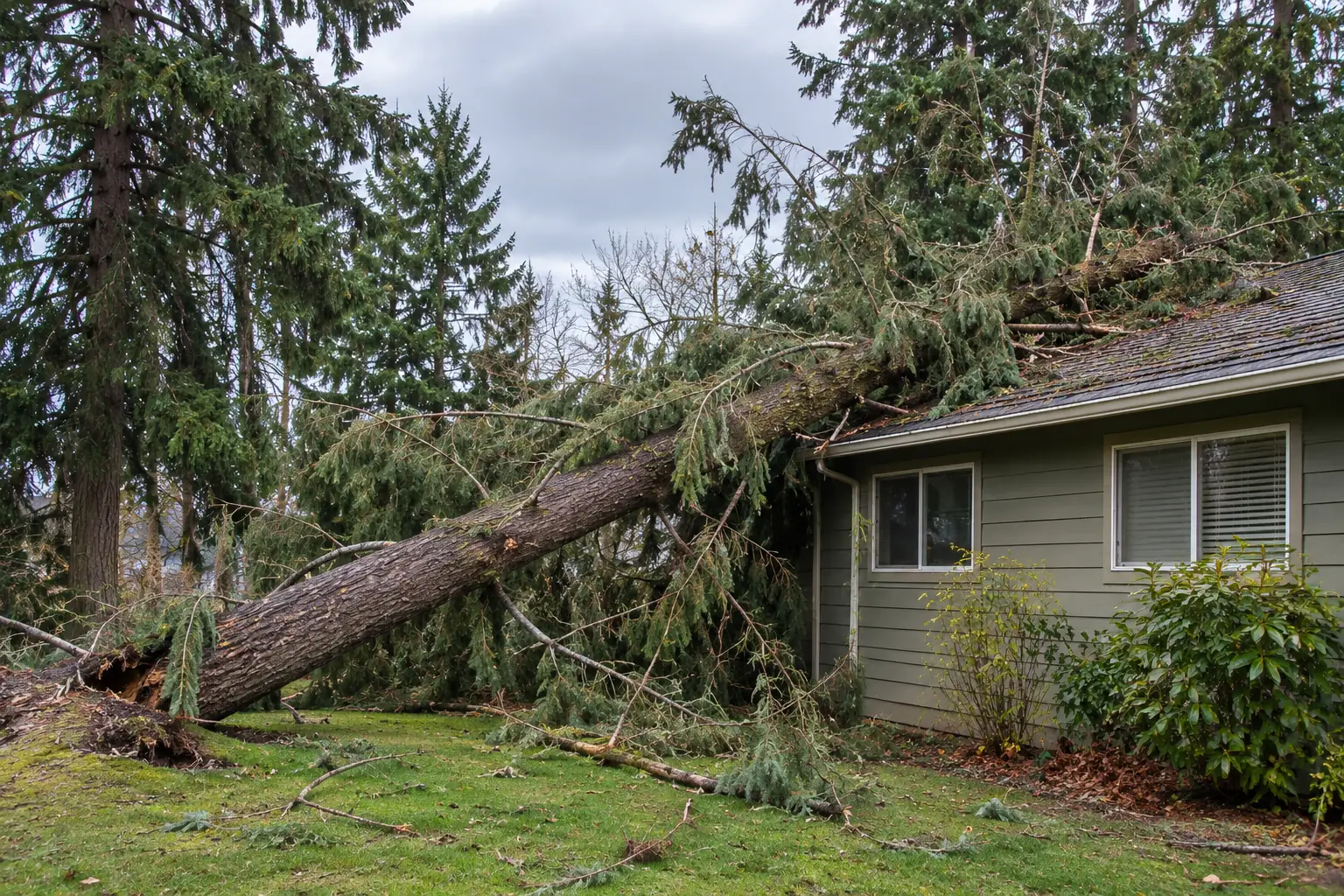
In general, a homeowners policy covers damage when a tree falls on your house or another covered structure, and it usually pays something toward removing the tree. When a tree falls and hits nothing, the typical policy does not pay to remove it. Your own policy decides, so read it and ask your insurer.
This guide explains the general rules from the Oregon Division of Financial Regulation, which regulates insurance in Oregon, and the Insurance Information Institute, an industry education group. It is general information, not advice about your policy. Tree Removal Medford is a free referral service, not an insurer or a tree company. It connects callers with an independent, CCB-licensed local tree company that can remove the tree and give you a written estimate for your claim. See the home page for how the service works.
What homeowners policies commonly cover
Damage to your house from a fallen tree is the core case most policies cover. The Division of Financial Regulation says that if a tree falls on your house, your homeowners insurance may cover the damage. The Insurance Information Institute says a standard homeowners policy covers damage to the structure, including from trees felled by wind, lightning or hail.
Removal is usually covered only when there is damage. The Division of Financial Regulation says homeowners insurance generally pays to remove debris from your home or outbuildings if a fallen tree causes damage. The Insurance Information Institute says that when a tree hits an insured structure, policies cover removal costs generally up to about $500 to $1,000, depending on the insurer.
That removal limit matters. Many tree removals cost more than $1,000, especially when a tree is lying on a roof and has to be lifted off in pieces. The tree removal cost guide shows the published ranges. Ask your insurer what your policy's limit is for tree and debris removal before you assume the whole job is paid.
What policies usually do not cover
A tree that falls without damaging a covered structure is the main case policies leave out. The Division of Financial Regulation says that if a tree falls and does not damage the residence, the typical policy does not pay to remove the tree. The Insurance Information Institute says that in that case there is generally no coverage for debris removal.
A few related limits come up often:
- Fences and paved areas. The Division of Financial Regulation says policies generally cover damage to your house from the weight of ice and snow, but do not cover damage to a retaining wall, foundation, fence or paved area.
- Poor maintenance. The Insurance Information Institute says poor maintenance is not covered by homeowners insurance. A tree that was dead or rotten for years can raise questions about a claim.
- Blocked driveways. The Insurance Information Institute says some insurers may pay to remove a fallen tree that is blocking a driveway, even with no damage. This varies by company.
Only your policy can tell you which of these apply. Read the declarations page and the sections on debris removal, trees and other structures, then call your agent or insurer.
When a neighbor's tree falls on your house
You usually file with your own insurer, even when the tree came from next door. The Division of Financial Regulation says that even if the tree is rooted in your neighbor's yard, you need to submit the claim to your own insurance company.

Your insurer may then try to recover its costs from the neighbor's insurer. The Insurance Information Institute explains that this is called subrogation, and that if it works, you may get your deductible back. Whether the neighbor is at fault depends on the facts and on Oregon law, so leave that question to your insurer or an attorney. If your own tree lands on a neighbor's property, call your insurer and ask how it handles that kind of claim.
When a tree falls on your car
Car damage from a falling tree is an auto insurance question, not a homeowners one. The Insurance Information Institute says damage from a tree falling on a car is covered under optional comprehensive auto coverage. Comprehensive is optional, so this applies only if you bought it, and it usually has its own deductible.
What to do after a tree falls
Start with safety, and document the damage before anything is moved. This order follows the Division of Financial Regulation's storm guidance and Pacific Power's safety advice.
- Check for power lines. If a tree or limb is on or near a line, or a line is down, stay at least 35 feet away. Call 911, then report it to Pacific Power at 1-877-508-5088, the number on its contact page for downed wires. Pacific Power's safety page says to always assume a downed line is energized. The trees near power lines guide has more.
- Get people out of danger. If a tree has come through the roof or the structure looks unstable, leave and call 911.
- Take photos and video. The Division of Financial Regulation says to photograph or video the damage. Capture the tree where it fell, the roof, siding, windows, fence and any cars, from several angles, before anything is moved.
- Call your insurer or agent as soon as you can. Ask about coverage, exclusions, deductibles and what the insurer wants before the tree is moved.
- Prevent more damage. The Division of Financial Regulation says to protect your property from further damage and save your receipts. A tarp over a hole in the roof is the classic example.
- Wait on permanent repairs. The Division of Financial Regulation says not to make permanent repairs until your insurer inspects the damage.
- List what was damaged. Make a detailed list, with brand names and model numbers for damaged items.
- Get a written estimate for the tree work. The estimate should describe the tree, where it landed and each part of the job.
Angi's national cost guide adds a point worth checking with your insurer: removing a tree from a house before the claim is underway can remove evidence an adjuster needs. If the tree is causing ongoing damage, tell the insurer and ask what it wants you to do.
Decide whether to file
Not every fallen tree is worth a claim. The Division of Financial Regulation says to weigh whether the benefits of filing outweigh the costs, because the damage may be less than or close to your deductible. It also says a reported claim could affect your future premium or your ability to get coverage. A written estimate from the tree company, plus a repair estimate for the house, makes this decision easier.
If you have trouble with a claim, the Division of Financial Regulation offers free help from its consumer advocates at 888-877-4894 (toll-free).
Working with a tree company on an insurance job
Clear paperwork makes the claim smoother. Ask the company you are connected with for:
- A written estimate that lists removal from the structure, cleanup, haul-away and any stump work as separate lines
- Photos of the tree before and during removal, if the company takes them
- A final invoice that matches the estimate
Ask the company for its CCB number, and check it on the Oregon CCB license search. Storm cleanup draws a lot of new crews, so check the license before work starts. The storm damage tree removal page explains what that kind of job involves, and the emergency tree removal page covers trees on houses and blocked driveways.
To reach a licensed local tree company, call (541) 200-0074. Ask it to put the estimate in writing for your claim, and ask whether it charges for one. Tree companies usually do not charge for an ordinary estimate, but this one sets its own terms.
How to lower the odds of the next claim
Keeping trees healthy is the main thing a homeowner can do. The Insurance Information Institute says maintaining the health of your own trees helps limit damage, and that poor maintenance is not covered. The Division of Financial Regulation says that if trees present a danger, consider having them removed. The hazard tree warning signs guide has a checklist you can walk through before storm season.
Frequently asked questions
Does homeowners insurance pay to remove a fallen tree in Oregon?
Usually only if the tree damaged a covered structure, such as your house or garage. The Oregon Division of Financial Regulation says the typical policy does not pay to remove a tree that falls without damaging the residence. The Insurance Information Institute says removal is generally covered up to about $500 to $1,000 when a tree hits an insured structure. Check your policy and ask your insurer.
My neighbor's tree fell on my house. Whose insurance pays?
The Division of Financial Regulation says you submit the claim to your own insurance company, even if the tree is rooted in your neighbor's yard. Your insurer may try to collect from the neighbor's insurer, and the Insurance Information Institute says you may get your deductible back if that works.
Is a tree that fell in my yard and hit nothing covered?
In most cases it is not. The Division of Financial Regulation and the Insurance Information Institute both say policies typically do not pay to remove a tree that did not damage a covered structure. The Insurance Information Institute notes that some insurers may pay when a fallen tree blocks a driveway, so ask yours.
Does insurance cover a fence crushed by a tree?
It depends on the policy and the cause. The Division of Financial Regulation says policies generally do not cover damage to a fence, retaining wall or paved area from the weight of ice and snow. Read the other structures section of your policy and ask your insurer about tree damage to a fence.
Should I remove the tree before the adjuster comes?
Ask your insurer first. The Division of Financial Regulation says to take photos, protect the property from further damage and wait on permanent repairs until the insurer inspects. If the tree is causing more damage or is a danger, tell the insurer and ask what it wants you to do.
Who covers a tree that falls on my car?
Your auto policy, not your homeowners policy. The Insurance Information Institute says a tree falling on a car is covered under optional comprehensive auto coverage, if you carry it.